Showing posts with label Duke Ellington. Show all posts

Wednesday, January 18, 2012

Duke Ellington: Don't Get Around Much Anymore

Still having fun with my new record player...

This is my favorite version of the great Ellington tune "Don't Get Around Much Anymore," recorded in May 1940. At that time, it was an instrumental piece called "Never No Lament." After it became a hit, Bob Russell wrote the lyrics we know and love so well, and the song title was changed to fit the lyrics.

I have a simple, stripped down version of this tune that I love to teach my piano students because invariably, they fall in love with the melody and the swing. Even the ones who normally drag their feet when presented with a tough new piece break down after a minute or two and exclaim, "This is FUN!"

Duke Ellington: Don't Get Around Much Anymore (Never No Lament)


Wednesday, December 29, 2010

Blog Rerun: Duke Ellington & Mahalia Jackson: Come Sunday

I'm taking a couple days off for the holidays, but here's a blog rerun of a gorgeous Mahalia Jackson song. I also wanted to add a link to a live recording of Come Sunday from the 1958 Newport Jazz Festival at the top here. Enjoy!

Duke Ellington and Mahalia Jackson: Come Sunday (Originally posted November 29, 2006)

I have the good fortune this winter of singing as a guest vocalist for the Richard Nelson Quintet, a jazz quintet based here in Maine. We’re doing a holiday-ish concert in December that Richard is calling “A Concert in the Spirit of Peace and Serenity” (concert details are on my website). One of the first songs Richard asked me to sing for this show is one of my favorite melodies written by Duke Ellington: Come Sunday.

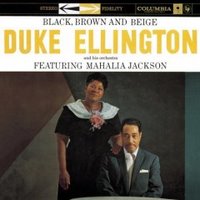
Besides the fact that “Come Sunday” has a gorgeous melody sung by one of my musical heroines, Mahalia Jackson, I’ve always been intrigued by the album it came from, Ellington’s Black, Brown and Beige. It’s interesting to me because we tend to see people in certain ways. When they move outside of that view we’ve created it can be, well, disconcerting to say the least.

Up until the 1940’s Duke Ellington was known pretty specifically for his big band and for popular songs like “Take the A Train” and “It Don’t Mean a Thing if it Ain’t Got that Swing.” Ellington was an extremely talented composer, and he began to experiment with even more complex music. In 1943, he performed an original symphony at Carnegie Hall: “Black, Brown, and Beige” which
"represented the story of African Americans in the United States. Black presented the people at work and at prayer, brown celebrated black soldiers who fought in American wars, and beige depicted African American music of Harlem." (Doris Greer)
The symphony wasn’t exactly jazz music, and it wasn’t exactly classical music. The critics couldn’t fit it into any set category of music, and their reviews and responses were so fiercely negative that Ellington never performed the entire piece in public again.

Luckily, he later recorded some of the music from this concert (though never the entire repertoire) on the album Black, Brown, and Beige, and it is there that we can here the lovely Mahalia Jackson singing Part IV: Come Sunday.

More information on Duke Ellington:
The “official” website
Ellington on Wikepedia
Smithsonian Jazz

Wednesday, March 21, 2007

Ella Fitzgerald: Do Nothing till You Hear from Me

It used to be that when I thought of Ella Fitzgerald, her light, danceable, airy repertoire usually came to mind. It Don't Mean a Thing if it Ain't Got that Swing or When My Sugar Walks Down the Street. That sort of fun, poppy song dressed up with Ella's signature vocal bells and whistles for flair. Kind of like a stick of cotton candy...a treat, absolutely sticky-sweet deeelicious, but not too much substance, mostly air. (Don't hate me, I was just a kid.)

Until I was home one summer from college, volunteering at a local radio station hosting an afternoon jazz show, and I put on Do Nothing till You Hear from Me from the Ellington Song Books sessions. That's when my view of Ella changed.

Do nothing till you hear from me
Pay no attention to what's said
Why one should tear the seam
Of anyone's dream
Is over my head

I've usually heard this song done at a moderate pace, with a big, bombastic arrangement, sung in an almost accusatory or sly manner. Not Ella. This song is luxurious, soulful, soothing. It's like she's holding the person she's singing to, and putting a cool cloth to their forehead. Shhh. There there. I'm not going anywhere.

The song is almost 8 minutes long. Stuff Smith plays a killer solo on violin. It entirely changed my view of Ella and my view of this song. The words are stunning. The melody is now one of my Ellington favorites. All because the musicians in this particular session take the time to get into them. To feel and live exactly what is going on in the music. Don't take my word for it. Put your feet up on the couch, turn the lights down low, and listen to this song.

The Best of the Song Books: The Ballads on Amazon.com
Do Nothing till You Hear from Me on iTunes

Wednesday, November 29, 2006

Duke Ellington: Come Sunday


I have the good fortune this winter of singing as a guest vocalist for the Richard Nelson Quintet, a jazz quintet based here in Maine. We’re doing a holiday-ish concert in December that Richard is calling “A Concert in the Spirit of Peace and Serenity” (concert details are on my website). One of the first songs Richard asked me to sing for this show is one of my favorite melodies written by Duke Ellington: Come Sunday.

Besides the fact that “Come Sunday” has a gorgeous melody sung by one of my musical heroines, Mahalia Jackson, I’ve always been intrigued by the album it came from, Ellington’s Black, Brown and Beige. It’s interesting to me because we tend to see people in certain ways. When they move outside of that view we’ve created it can be, well, disconcerting to say the least.

Up until the 1940’s Duke Ellington was known pretty specifically for his big band and for popular songs like “Take the A Train” and “It Don’t Mean a Thing if it Ain’t Got that Swing.” Ellington was an extremely talented composer, and he began to experiment with even more complex music. In 1943, he performed an original symphony at Carnegie Hall: “Black, Brown, and Beige” which
"represented the story of African Americans in the United States. Black presented the people at work and at prayer, brown celebrated black soldiers who fought in American wars, and beige depicted African American music of Harlem." (Doris Greer)
The symphony wasn’t exactly jazz music, and it wasn’t exactly classical music. The critics couldn’t fit it into any set category of music, and their reviews and responses were so fiercely negative that Ellington never performed the entire piece in public again.

Luckily, he later recorded some of the music from this concert (though never the entire repertoire) on the album Black, Brown, and Beige, and it is there that we can here the lovely Mahalia Jackson singing Part IV: Come Sunday.

More information on Duke Ellington:
The “official” website
Ellington on Wikepedia
Smithsonian Jazz